

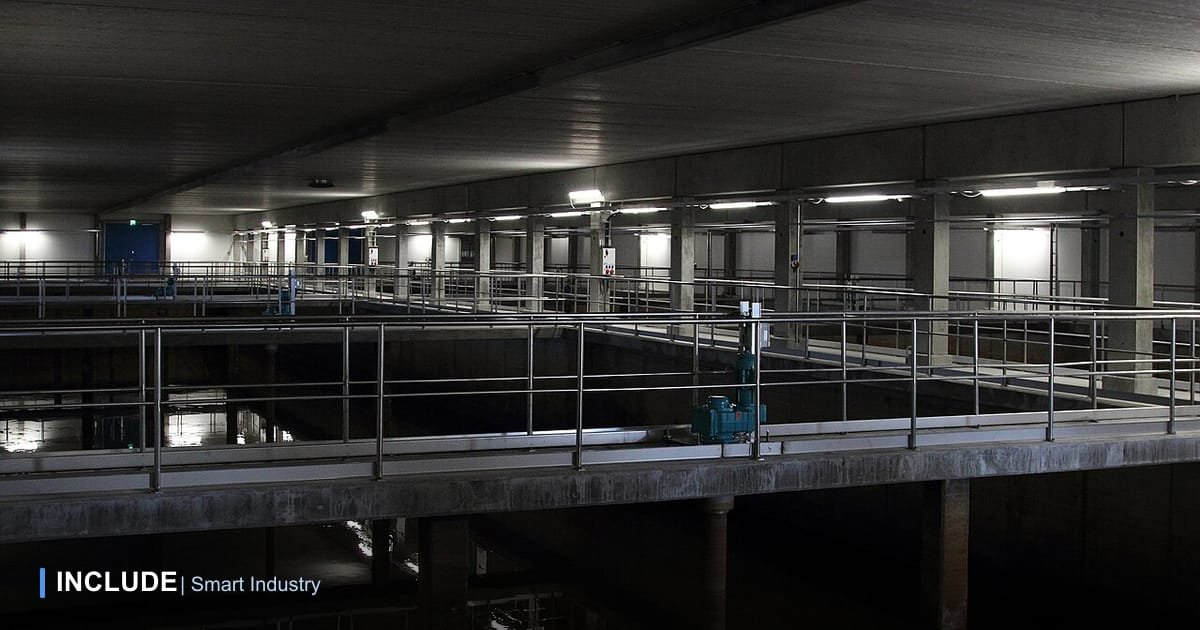
A wastewater treatment plant (IPAL) is the part of a factory that rarely gets attention until something goes wrong. Yet the consequences are serious: effluent that fails quality standards can pollute the environment and bring legal risk. In many plants, IPAL condition is checked through periodic lab tests. The results are accurate but late: a problem that happens today is only discovered when the lab report arrives.
This article covers real-time wastewater treatment monitoring: which parameters field sensors can measure, which still need a laboratory, and how the two complement each other.
Commonly regulated parameters
Effluent quality standards in Indonesia are set in environmental regulations and can differ by industry and by each facility's permit. Common parameters include pH, BOD, COD, TSS, ammonia, and industry-specific parameters. Always refer to the standards in your facility's environmental permit.
What sensors can monitor in real time
- pH. The easiest and most important parameter to monitor continuously. A sudden pH change is often the first sign that unusual process waste has entered the plant.
- Dissolved oxygen (DO) in the aeration tank. Bacteria in aerobic treatment need enough oxygen; DO too low hurts treatment, while too high means blowers are wasting power.
- Turbidity, as an indicator of suspended particles related to TSS.
- TDS and conductivity, to detect changes in dissolved salts.
- Ammonia, with a suitable sensor.
- Water temperature, which affects bacterial activity.
- Flow and tank level, to know the hydraulic load and prevent overflow.
What still needs a laboratory
Parameters such as BOD and COD are usually measured in a laboratory or with specialised analysers far more complex than ordinary sensors. Field sensors do not replace lab tests for official reporting. Their role is early warning between lab test dates, so problems can be handled before the next result comes back bad.
For continuous monitoring obligations connected to the government, such as SPARING for certain industries, there are specific requirements for equipment and data connections. Make sure those are met according to the applicable rules, separately from internal operational monitoring.
Benefits of operational monitoring
- Detecting shock loads. Waste with extreme pH or high concentration from production can kill the treatment bacteria. A pH alarm gives time to hold back or neutralise the flow.
- Optimising aeration blowers. Blowers are often the largest electricity user in an IPAL. Controlling aeration by DO, instead of running flat out, can save energy while keeping performance.
- A traceable history. When a lab result comes back bad, hourly data helps find when and what happened.
Sensor installation tips
- Place pH sensors at the inlet and outlet to see conditions before and after treatment.
- Place the DO sensor in the aeration tank, away from direct diffuser bubbles.
- Plan routine cleaning and calibration, because the IPAL environment fouls sensors quickly.
Example response when a pH alarm fires
Monitoring only pays off with a clear procedure when an alarm appears. A simple flow for a pH alarm at the IPAL inlet:
- The alarm goes to both the IPAL operator and the production supervisor, since the cause often lies in production.
- The operator checks for batch discharges, tank washing, or chemical leaks upstream.
- Flow is held in the equalisation tank where possible, so extreme waste does not go straight into the biological tank.
- Neutralisation is done according to procedure, and pH is watched until it returns to normal.
- The event is logged, including the cause and the action, as input for improvement and as proof of handling.
With a flow like this, an alarm turns into consistent action, not just a notification that is read and forgotten.
Start simple. One pH sensor at the inlet and one DO sensor in the aeration tank already catch most of the common operational problems. Once the team is used to responding to alarms and sees the benefit, measurement points can be added gradually to suit the waste and processes at your facility. This staged approach also makes sensor upkeep easier, because the team learns to maintain a few sensors before the number grows.
Frequently asked questions
Can sensors replace lab tests for reporting?
No. Official reporting follows the methods and laboratories set by regulation. Operational sensors complement it with early warning.
Which parameters should we monitor first?
pH at the inlet and outlet, and DO in the aeration tank. Both deliver operational value fastest.
What about SPARING obligations?
SPARING has specific requirements for equipment and data connections to the government. Check the rules that apply to your industry separately.
Monitoring an IPAL with INCLUDE
The IncludeBox Water Quality Sensor reads pH, dissolved oxygen, turbidity, TDS, ammonia, and water temperature for operational IPAL monitoring on the INCLUDE platform. Alarms fire when a parameter leaves its normal range, and blower electricity can be monitored alongside through InEnergy. Existing analysers that support Modbus can also connect through IncludeGateways.
Has an IPAL lab result ever come back out of spec?
Tell us about your treatment process and the points you want to monitor. The INCLUDE team will help design operational monitoring.
Free consultation on WhatsApp → See IncludeBox →