

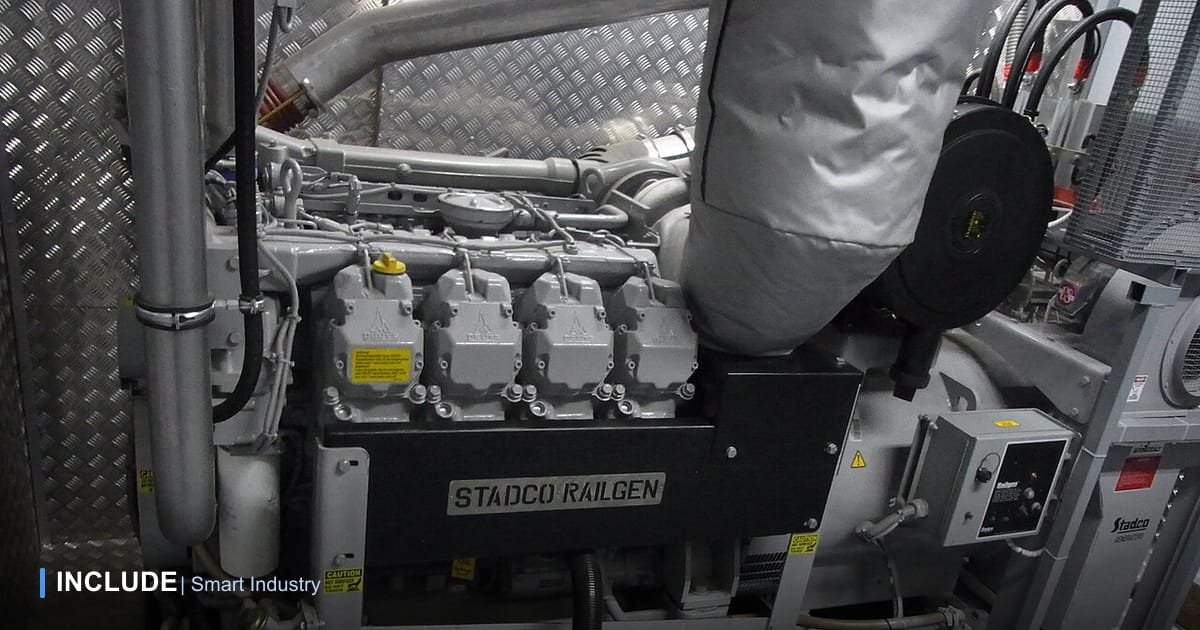
A generator is insurance. It is rarely used, but when the PLN grid fails, the whole operation depends on it. The trouble is that a generator that is rarely used is also rarely watched. A weakening battery, low diesel, or an alarm that has been showing for weeks only comes to light the moment the generator is needed and fails to start.
At remote sites such as telecom towers, pump stations, out-of-town warehouses, or unstaffed branches, the problem multiplies. Nobody looks at the generator panel every day. This article covers remote generator monitoring: which parameters to watch, how the data is read, and how to send it from sites without office internet.
Why generators fail when they are needed
- A weak starter battery. The most common reason a generator fails to start. Battery voltage drops slowly and goes unnoticed until the generator is asked to run.
- Low or missing fuel. Diesel gets used in tests, evaporates, or disappears without clear records.
- Alarms nobody reads. The controller often already shows warnings, such as high temperature or low oil pressure, but nobody sees the screen.
- Never tested under load. A generator that only runs without load may not carry the real load when it matters.
Parameters to monitor
- Operating status: off, standby, running, or in alarm.
- Starter battery voltage, to catch a weakening battery long before it fails.
- Fuel level, including sudden drops that do not match running hours.
- Oil pressure and coolant temperature while running.
- Output voltage, current, frequency, and power, to confirm the generator carries the load steadily.
- Running hours, as the basis for service schedules.
Reading data from the generator controller
Many modern generator controllers provide a communication interface, usually Modbus RTU over RS-485 or Modbus TCP over a network. That means most of the parameters above already exist inside the controller; they just need to be read and sent somewhere visible. Before starting, get the Modbus register documentation from the controller manufacturer, since register addresses differ between brands.
For older generators without a communication port, the key parameters can still be measured with added sensors: an energy meter on the generator output, a tank level sensor, and a battery voltage reading.
Sending data from remote sites
Generator sites often have no Wi-Fi or office network. This is where a gateway with 4G cellular connectivity helps: it reads the controller over Modbus, then sends the data to the platform over the cellular network. Wherever there is a cellular signal, every generator can be watched from one dashboard. If the connection drops, pending data should be stored first and sent once the network returns.
Alarms that are actually useful
- Battery voltage below a limit, so the battery is replaced before a failed start.
- Low fuel level and fuel dropping while the generator is off, which can point to a leak or loss.
- Failure to start during an outage or a scheduled test.
- Controller alarms, such as high temperature or low oil pressure, forwarded to the person responsible.
Send alarms to people who can act, not to everyone. Too many alarms make the important ones get ignored.
Routine tests and service schedules
Running hours and test results make service schedules based on real condition, not just the calendar. Periodic load tests are also easier to prove: the output power chart shows whether the generator actually carried load during the test, for how long, and whether voltage and frequency stayed stable.
Tracking fuel consumption
With tank level and running hours recorded, fuel consumption per hour can be calculated. An illustrative example: during a two-hour load test, diesel level drops by 40 litres, so consumption is about 20 litres per hour at that load. This figure is useful in two ways. First, it estimates how long the generator can run during a long outage with the current tank level. Second, it catches anomalies: consumption suddenly much higher than usual at the same load can point to an engine problem or lost fuel.
For companies with many sites, the data also simplifies fuel delivery planning. Tanks are refilled based on real levels, not a fixed schedule that is sometimes late and sometimes too early.
Frequently asked questions
Can every generator be monitored remotely?
Nearly all. Generators whose controllers support Modbus are the easiest to read. Older units can be monitored with added sensors for electrical output, fuel level, and battery voltage.
What if the site has no internet?
Use a gateway with 4G cellular connectivity. Wherever there is a cellular signal, data can be sent.
Can the generator be started remotely?
Technically yes on some controllers, but it must be designed carefully with safety procedures. At first, monitoring and alarms deliver most of the value.
Monitoring generators with INCLUDE
IncludeGateways reads the generator controller over Modbus RTU and sends the data over 4G or whatever network is available to the INCLUDE platform. On the dashboard, every generator's status, battery voltage, fuel level, and alarms are visible in one place, with history and notifications. An energy meter on the generator output can also be monitored alongside other loads in InEnergy. To choose the communication path, see our IoT connectivity guide.
Running generators at sites nobody visits often?
Tell us how many generators you have, the controller brand, and the network conditions on site. The INCLUDE team will help design the monitoring.
Free consultation on WhatsApp → See IncludeGateways →