

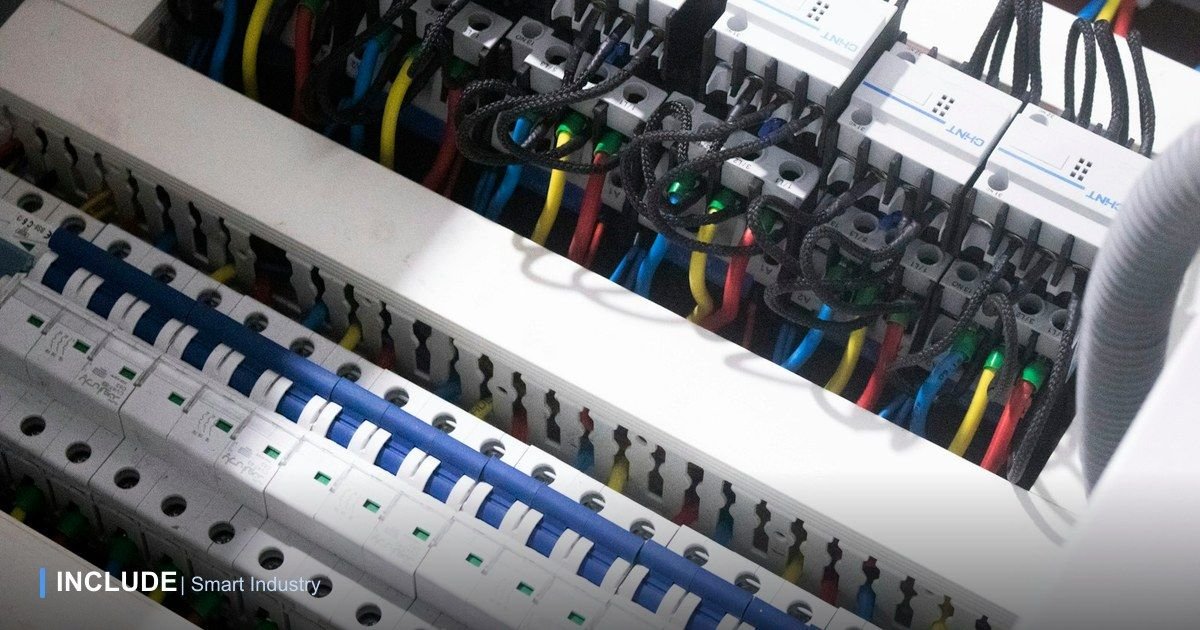
Many IoT monitoring projects start with a simple assumption: sign up for a platform, install a few sensors, and the dashboard just lights up. For a genuinely new plant with uniform equipment, that can happen. But most factories in Indonesia have been running for years, PLCs from three different vendors, power meters installed across different eras, an existing local SCADA, and operators with their own established way of working. In that situation, a good platform alone isn't enough. What's needed is integration work, and that's the role of a system integrator (SI).
The line between "use a platform" and "need integration"
The clearest signs you've crossed the self-service boundary:
- More than one protocol needs unifying. Modbus RTU from an old PLC, Modbus TCP from a newer power meter, MQTT from wireless sensors: each speaks a different "language" and needs correct register mapping, not just a plug-in connection.
- An existing system can't be replaced. A SCADA or HMI in use for years often has to keep running alongside a new monitoring platform, not be fully replaced by it.
- The plant's network topology is complex. Multiple buildings, multiple lines, sometimes multiple sites: all need to connect to one platform over a secure, reliable network architecture.
- A business process needs to be included. Notifications must integrate into an existing maintenance ticketing system, not stand alone as a separate app.
What a system integrator actually does
SI work isn't selling new software, it's designing and assembling the architecture that connects the old with the new:
- Audit existing devices & protocols. Mapping every installed PLC, power meter, and sensor: model, protocol, Modbus registers, physical access points.
- Gateway & network architecture design. Determining how many gateways are needed, where, and how OT/IT network segmentation should be designed to stay secure (see also our piece on OT/IoT industrial cybersecurity).
- Configuration & data mapping. Matching every Modbus register or sensor parameter to a meaningful dashboard label, detailed work that determines whether the displayed data is actually readable and trustworthy.
- Integration into existing workflows. Connecting platform notifications to channels the team already uses, a WhatsApp group, a ticketing system, or internal maintenance software.
- Handover & training. Making sure the internal team can operate and maintain the system after the project ends, rather than depending on the integrator indefinitely.
When self-service is enough, when you need an SI
A practical rule of thumb: with under roughly 20 measurement points, uniform equipment, and no legacy system that must keep running, an internal team can often start on a self-service platform alone. Once the point count grows, protocols diversify, or an existing system must stay compatible, the cost of trial-and-error usually exceeds the cost of bringing in an SI from the start: register-mapping mistakes or a poor network design only become visible once the system is running, and fixing them mid-operation costs far more than designing it correctly upfront.
The most common engagement model also doesn't have to be "all or nothing". Many plants start with an SI only for the audit and network architecture design phase, then hand daily installation and configuration to a trained internal team. This model keeps SI cost limited to the work riskiest to get wrong, without making the plant fully dependent on an outside party for day-to-day operations.
Questions worth asking before choosing a system integrator
Because SI work is hard to evaluate from a proposal alone, four questions help filter quality early:
- Do they audit equipment before proposing a solution? An SI that jumps straight to a generic package without first mapping existing equipment risks wrong assumptions about protocol or compatibility.
- Who holds the documentation after the project ends? Network diagrams, Modbus register lists, and device credentials should be handed to the internal team, not known only to the integrator.
- How is downtime handled during installation? Gateway or sensor installation ideally shouldn't require a full production stop; ask about a staged installation plan.
- Is there a handover plan to the internal team? A good SI designs the system so the plant's own team can maintain it, rather than creating permanent dependence on external support.
How INCLUDE answers this need
INCLUDE's System Integrator service handles projects from legacy device audits through full integration into INCLUDE, with IncludeGateways as the bridge for already-installed Modbus RTU/TCP PLCs and power meters. The approach is staged: audit and device mapping first, then architecture design, not a generic package assumed to fit every plant.
Is your plant equipment a mix of different brands and protocols?
Tell us about the PLCs, power meters, and SCADA already running. The INCLUDE System Integrator team will help assess the integration architecture.
Free consultation on WhatsApp → See IncludeGateways →