

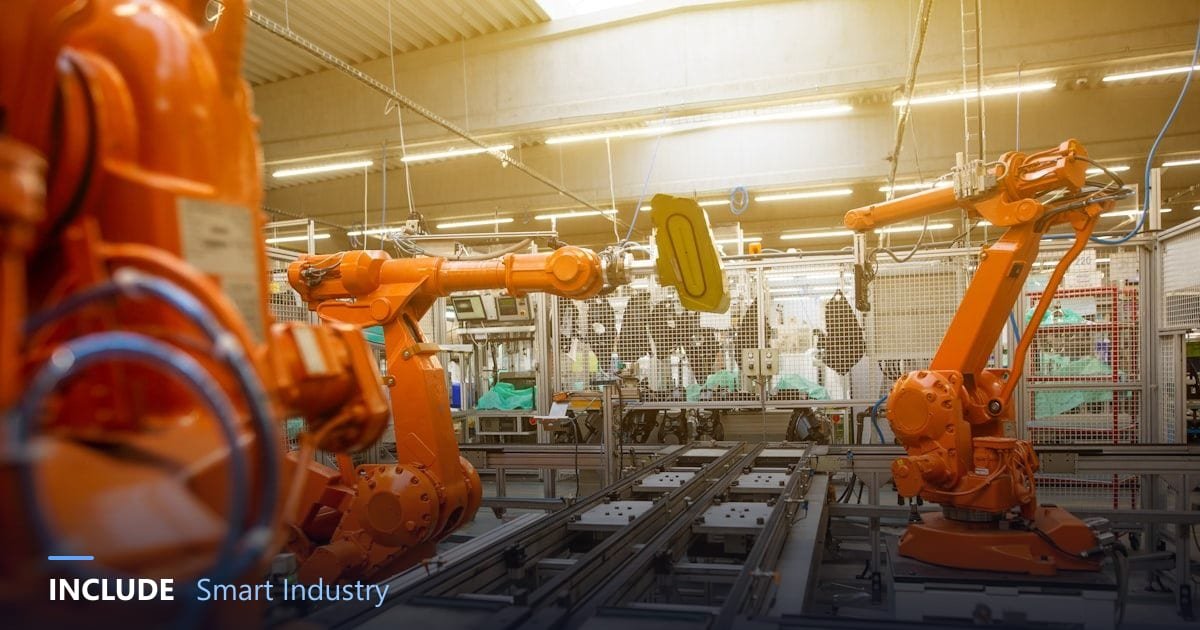
Industry 4.0 is the name for the fourth industrial revolution: connecting machines, data, and people through digital technology so plants can work smarter. The Indonesian government promotes it through the Making Indonesia 4.0 programme, and many plants have heard the term. The biggest challenge is usually not interest, but where to start and how to prove results.
This article covers the core pillars of Industry 4.0, why many transformations stall, and practical steps to begin in stages.
Core pillars of Industry 4.0
- Internet of Things (IoT). Machines, sensors, and equipment connect and send data continuously.
- Data and analytics. Operational data is turned into information that supports decisions.
- Artificial intelligence and automation. Systems recognise patterns, predict problems, and take certain actions automatically.
- Cloud and connectivity. Data can be reached from anywhere, including across sites.
- System integration. Shop-floor data connects to business systems such as ERP.
Why transformations stall
- Trying to replace everything at once. Large, expensive, long projects show results years later, and management support fades before then.
- Starting from technology, not problems. Buying devices without a clear question produces data nobody uses.
- Ignoring people. Operators and supervisors left out go back to old ways.
- Not measuring results. Without before-and-after numbers, it is hard to win budget for the next phase.
Practical steps to begin
- Pick one real problem with a cost you can feel, such as a high electricity bill, recurring machine failures, or time-consuming manual logging.
- Measure the starting point, so results can be compared later.
- Install just enough monitoring. Existing machines and meters can often be used without replacement.
- Involve the field team from the start, including training on the dashboards.
- Prove the result within one to three months, then expand to other lines or sites.
An example staged sequence
Many plants start with energy monitoring, because the cost shows clearly on the bill and installation is relatively simple. Next comes machine condition monitoring for predictive maintenance, then production line performance. The following phase connects that data to business systems. Each phase delivers results on its own and lays the ground for the next.
The role of existing data
Plants that have run for years usually hold plenty of unused data: digital power meters, PLCs, manual logsheets, and maintenance records. Transformation does not have to start from zero. Connecting data sources you already have is often the lowest-cost, fastest-return step.
Preparing people and processes
Technology is only a third of transformation. The rest is people and processes. Decide who owns the data, who responds to alarms, and how decisions are made from dashboards. Without that, a new system is just another screen on the wall. Adoption is covered in operator training as the key to IoT adoption.
Success indicators per phase
| Phase | Example indicators |
|---|---|
| Energy monitoring | Energy per unit, share of use in peak hours, kVArh charges |
| Machine condition | Sudden breakdowns, total downtime, emergency spare-part cost |
| Line performance | OEE per line, top stop reasons, target achievement per shift |
| System integration | Time to prepare reports, amount of data re-entered by hand |
Set indicators before each phase begins, so results can be compared honestly.
Data security from the start
Connecting machines to a network brings new risks. Separate the control network from the office network, use encrypted connections, and limit who can access data and change settings. Thinking about security from phase one is far cheaper than fixing it after the system has grown. See OT and industrial IoT cybersecurity.
Budget in phases, not all at once
A staged transformation also makes budgeting easier. Instead of one large project that is hard to approve, each phase is proposed with clear targets and indicators. Results from the previous phase support the next request. Management sees real progress every few months, rather than waiting years for one uncertain big result, and the internal team has time to learn and adapt at each step.
Frequently asked questions
Is Industry 4.0 only for large plants?
No. A staged approach lets mid-sized plants start from one problem with a controlled investment.
Do we have to replace old machines?
Not necessarily. Many machines can be monitored with added sensors or read through existing PLCs.
What is the most sensible first step?
Pick one problem with a clear, measurable cost, such as energy or recurring machine failures.
Staged transformation with INCLUDE
The INCLUDE platform offers ready-made solutions for the early phases, such as InEnergy for energy and InAsset for machine condition. For wider integration, the INCLUDE services team helps from survey to rollout. A guide to choosing a platform is in criteria for choosing a plant IoT platform.
Not sure where to start your digital transformation?
Tell us about your plant and its biggest problem. The INCLUDE team will help plan the first step.
Free consultation on WhatsApp → See services →