

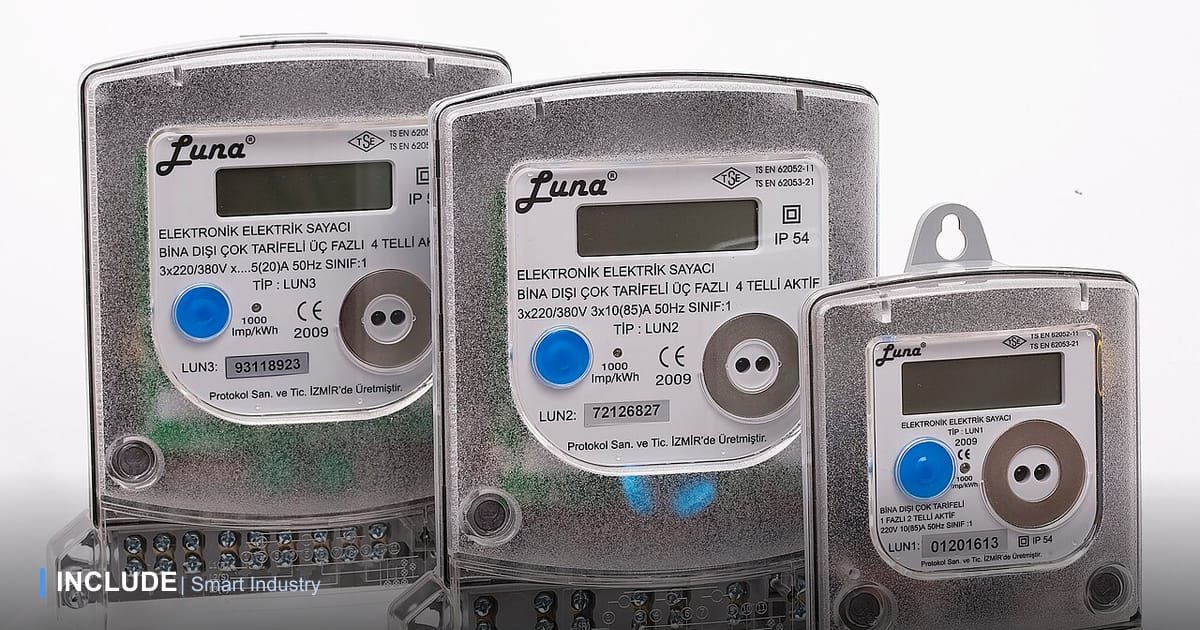
Every month, a plant or building receives one number from PLN: total kWh and total cost. That number is enough to pay the bill, but not enough to manage energy. Which line uses the most? Which area stays on at night? Which tenant should carry a larger share of the cost? The answer lies in electrical submetering.
Submetering means installing extra meters below the PLN main meter, so usage can be split per production line, per area, or per tenant. This article covers the benefits, how to choose measurement points, and a sensible installation order.
Benefits of submetering
- Fair cost allocation. Electricity costs can be charged to departments, lines, or tenants based on real use, not split evenly or by floor area.
- Finding waste. A line with much higher consumption per unit than a comparable line usually has a specific problem: a machine needing maintenance or an inefficient operating pattern.
- Proving savings. After replacing a motor or fixing an operating schedule, a submeter at that point shows whether the savings really happened.
- Capacity planning. Before adding machines or raising contracted power, you know exactly how loaded each panel is and when it peaks.
Choosing measurement points
Putting a meter on every socket is neither realistic nor necessary. Measurement points should follow the questions you want answered:
- Per production line, to calculate energy per unit of product.
- Per major utility: air compressors, chillers, cooling systems, pumps, and boilers. Utilities are often the largest energy users yet the least often measured separately.
- Per building or floor on sites with several buildings.
- Per tenant in leased buildings, warehouse estates, or shopping centres.
Match the meter to the system: single-phase meters for small panels and single machines, three-phase meters for distribution panels and large machines.
A sensible installation order
- Start with the largest users. Three to five points that account for most consumption usually explain most of the bill.
- Add the areas most suspected of waste, such as utilities that stay on outside working hours.
- Expand in stages once data from the first points shows useful patterns. Results from the first phase make a strong case for the next budget.
From meter data to reports
A meter that only shows numbers on its own display still has to be logged by hand every day. Submetering pays off when every meter connects to one place: consumption per point side by side, totalled automatically, and compared with the main meter. The gap between the main meter and the sum of all submeters matters too, because it reveals unmeasured loads or distribution losses.
In leased buildings, the same data can drive monthly tenant billing without manual readings that are error-prone and easy to dispute.
Common mistakes
- Meters installed but never read. Data that never reaches a report or dashboard changes no decisions.
- No record of what each point measures. After a few months, nobody remembers which machines the meter on panel B3 covers.
- No reconciliation with the main meter. Without routine checks, a misinstalled CT or a wrong ratio can go unnoticed for a long time.
Technical points to watch
- Match the meter to the load. Single machines and small panels are fine with single-phase meters. Distribution panels and large machines need three-phase meters that read each phase.
- Mind the CTs (current transformers). For high currents, the meter reads through CTs. A wrongly entered CT ratio shifts every reading by the same factor, and the mistake is often only found during reconciliation with the main meter.
- Name measurement points clearly, for example "Panel B3, Packing Line", not just a meter number.
Example: energy per unit of product
A simple illustration: two similar packing lines each produce 10,000 units a day. Submeters show line A using 800 kWh and line B 1,100 kWh. Energy per unit is 0.08 and 0.11 kWh. A gap of almost 40% between two lines that should be alike is a clear pointer to check line B first. Without submetering, that difference disappears inside one total.
Frequently asked questions
How is a submeter different from the PLN main meter?
The PLN main meter is used for official billing. A submeter is your own meter below it, used to see how usage splits inside the facility.
Can submeters be used to bill tenants?
Yes, and it is common in leased buildings. Make sure the meters and the calculation method are agreed in the lease.
How many submeters do we need?
Start with the points that explain most of the bill, usually the three to five largest, then add more as needed.
Submetering with InEnergy
InEnergy shows the consumption of every submeter in real time, with history, point-to-point comparison, and cost estimates based on the tariff you set. The meters can be IncludeBox Energy Meters (single or three-phase), or power meters already installed via Modbus and IncludeGateways. The data also underpins a data-driven energy audit.
Is your electricity bill just one big number?
Tell us how many panels, lines, or tenants you want to separate. The INCLUDE team will help design submetering points for InEnergy.
Free consultation on WhatsApp → See InEnergy →